
3M™ Impact Protection Attachment (IPA) · structural attachment for security window film · installed by Epic
The sealant is 3M’s. The system is Epic’s.
IPA is the structural bead that turns security film from a safety-glazing product into a forced-entry, windstorm and blast system — by anchoring film and glass to the frame.
3M specifies IPA for every forced-entry, windstorm and blast application of its security films. Epic installs it with the patent-pending Epic Method — gasket out, cork wedges in, film to the frame, bead tooled into the open channel — by Epic’s own Certified Installation Specialists, and no one else. The numbers below are the installation specification Epic puts in writing on every job.
- 3/8" forced-entry · 1/2" blast
- 170 psi tensile
- Tack-free in 60 min
- Installed the Epic way
3M IPA at a glance
■ Installed with the patent-pending Epic Method on every forced-entry, windstorm and blast application.
What “held” looks like.
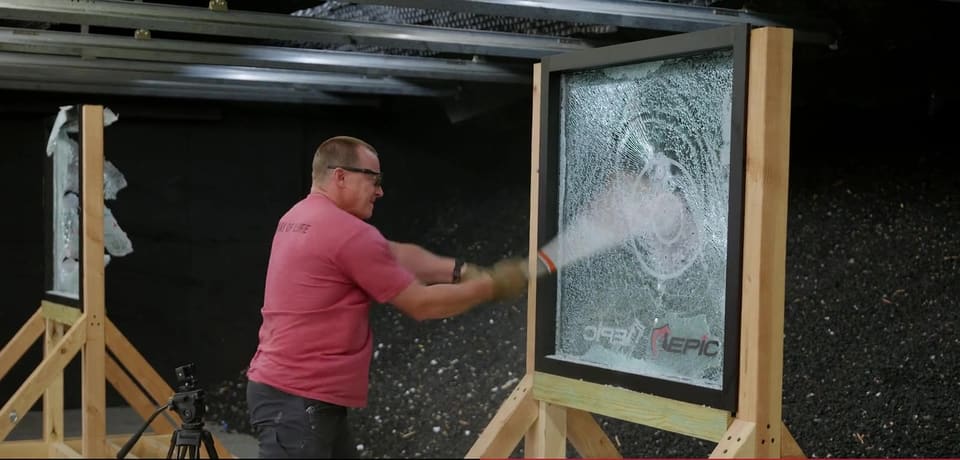
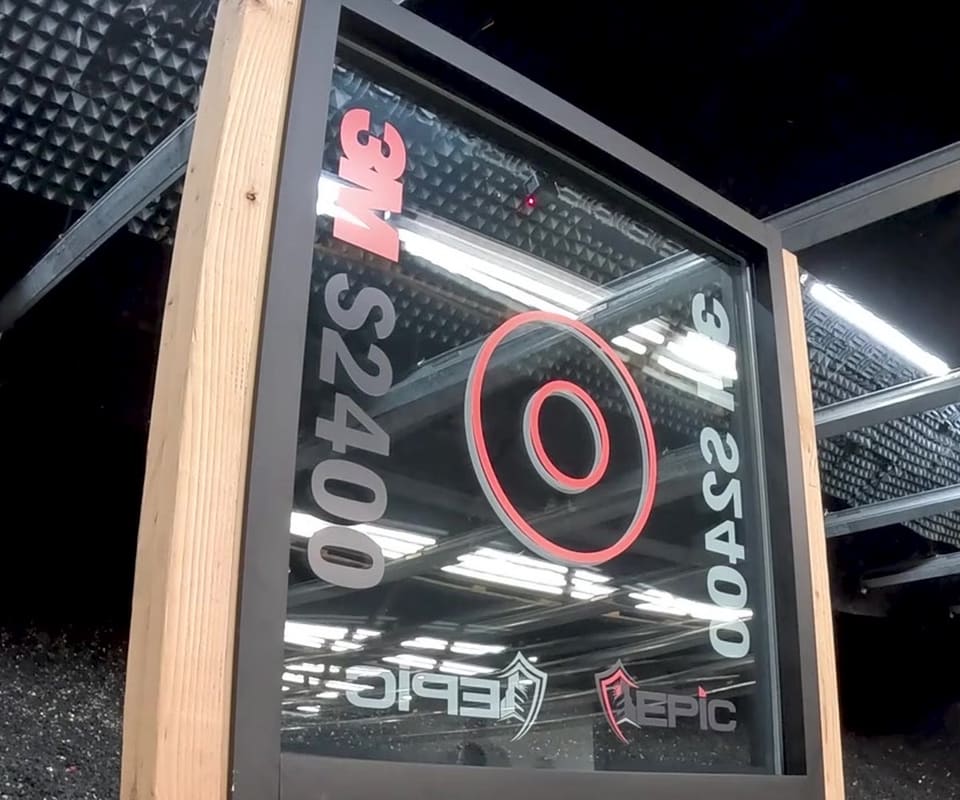
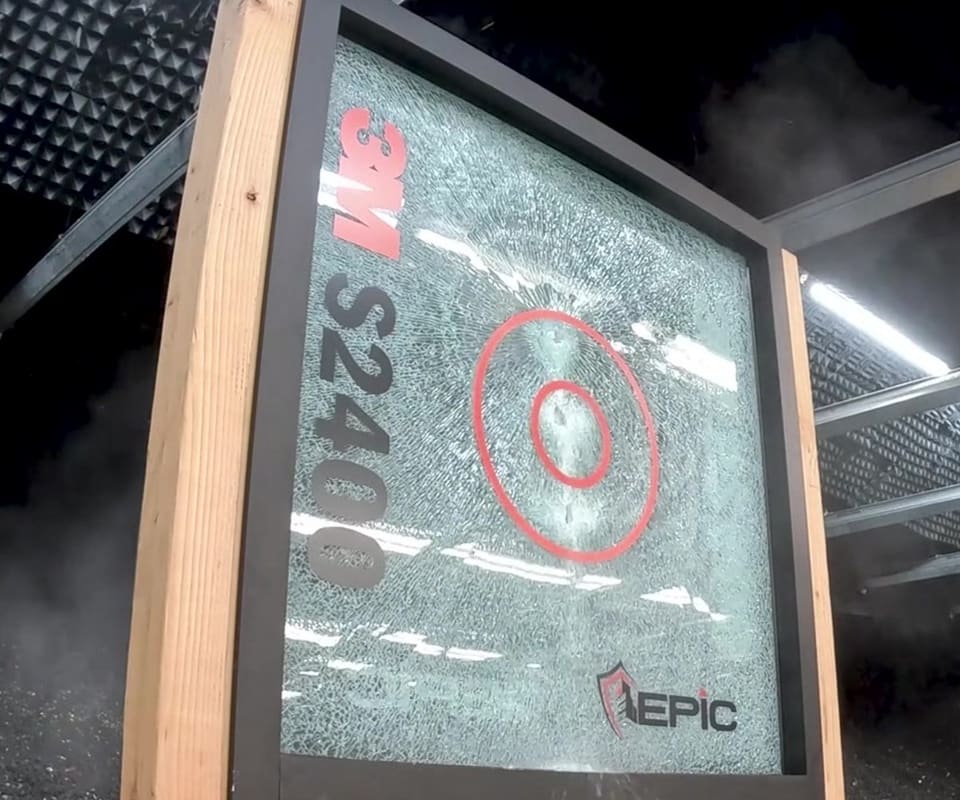
What the bead is for. The same panel of glass, before and after Epic’s live demonstration: 3M S2400 with 3M IPA installed the Epic Method way, on a standard quarter-inch tempered double-pane unit. Drag the handle. The glass is destroyed; the attachment keeps every piece of it in the frame.
No rendering, no stock photo — two frames, four seconds apart, from one fixed camera at Epic’s demonstration at Royal Range, Nashville. See one in person →
What it does, and why it is the part that matters.
A window is held in its frame by a few screws and a gasket — enough for weather, not for a ram or a pressure wave. Security film bonded only to the glass leaves with the glass. IPA bonds the film and the glass to the frame along every edge, so when the glass breaks, the load goes into the building instead of into the room.
Why buildings specify 3M IPA
- It is the specification: 3M requires an attachment for forced-entry, windstorm and blast applications of its security films; IPA is 3M’s own system for it.
- Forced-entry delay: with the film anchored, an intruder is working against 3M S2400’s published tear and elongation performance across the whole opening — not against a gasket.
- Blast-fragment mitigation: the bead keeps the glass-and-film laminate in the frame longer through overpressure, which is what reduces flying glass.
- Windstorm-rated bond: a 3/8" minimum bead meets the windstorm attachment requirement in the IPA specification.
- Daylight opening preserved: installed Epic’s way, the bead sits in the glazing channel, so the finished window looks like a window — not a window with a caulk border.
How Epic installs it
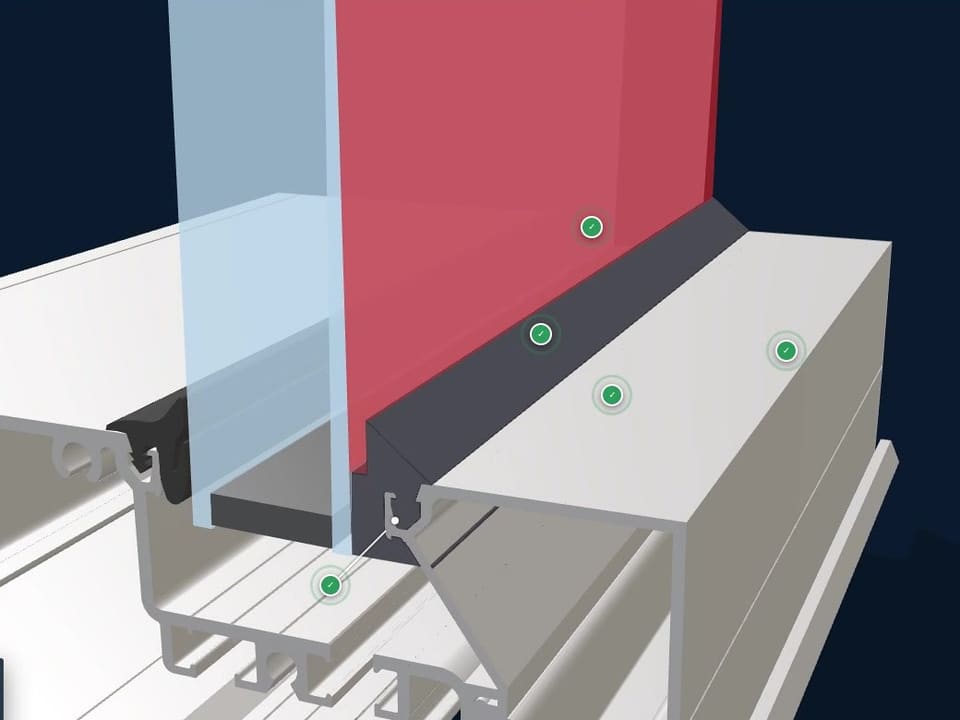
Five stages, none optional: the factory window as found; the interior gasket removed completely; two cork wedges per side driven into the open channel and cut flush, holding the glass tight against the exterior gasket; the specified 3M film applied flush to the frame; then IPA tooled into the open channel at 3/8" or 1/2" on both frame and glass/film, with additional sealant keyed into the frame for a deeper mechanical interlock. That last stage is where the method earns its patent application — the Epic Method page shows each stage in 3D, next to the shortcut.
Minimum bead by application
3/8" satisfies forced-entry and windstorm per the 3M IPA specification. Epic steps up to 1/2" on oversized lites independent of threat class.
Oversized and unusual glass
3/8" and 1/2" are Epic’s standard beads. On very large lites the glass itself can outweigh what a standard-application structural bead is rated to carry, so Epic engineers the bead for the opening — wider and deeper than 1/2", sized to the weight at the bond line rather than to the threat class. Where a frame profile does not give the bead anything to key into, Epic builds its own tooling so the window can be attached properly, not approximately. Both are decided at the survey and written into the scope.
Fine print, said plainly: some openings cannot take an adequate structural bead, and some owners who cannot replace the glass ask us to apply the sealant anyway on the view that something is better than nothing. We understand that view and will do the work — but we say in writing, on the proposal and in the closeout record, that those beads are not an adequate structural attachment and are not represented as one.
The numbers.
Components, as installed
Cured properties per 3M published data for 3M™ Impact Protection Attachment; bead configuration per Epic installation specification SEC-IPA. Existing aluminum-framed glazing with an insulating glass unit is the reference condition; other frames and monolithic glass are surveyed individually. No window film or attachment is bulletproof.
Epic Method structural silicone spec sheet
The patent-pending 5-stage attachment method, minimum bead by application, what sets the process apart.
The Retrofit Gap: ASTM F3561 and retrofit security film
Epic’s position statement with the Intertek test summary — 3M S2400 + the Epic Method on commercial storefront framing, tested to ASTM F3561 Method A. What the standard was written for, what we tested, the Level 2 result on all four assemblies, and exactly what this is not.
Specify it in one line
“3M™ safety and security film with 3M™ Impact Protection Attachment, installed per the Epic Method (gasket removed, cork wedges in the open channel, structural bead tooled into the open glazing channel at 3/8" minimum, 1/2" for blast and oversized glass) by Epic Certified Installation Specialists.” Copy it into the spec; we will meet it.
Every security film Epic installs is attached this way.
3M S2400
The only polyurethane security film we know of — every other security film on the market is polyester (PET). About 4X the elongation (560% vs 130%) and two-thirds more Graves tear resistance (24.6 vs 14.8 lbf·in) than a 22-mil PET security film, by 3M’s published data — and installed anchored to the frame with the Epic Method, never film-only.
3M Ultra S800
The 3M security film tested for blast, impact and seismic events — installed anchored to the frame, never film-only.
3M Ultra Prestige
The Prestige solar stack bonded to a micro-layered safety film — one installation for heat, UV and glass retention.
3M Ultra Night Vision
Night Vision solar performance on a micro-layered safety film — for buildings that need both and do not want a mirror.
3M S140
14-mil security film for smash-and-grab, vandalism and accidental breakage — sized to the risk and priced to the budget.
Every window has a record — and initials on every step.
Each installer logs every window in Epic’s app and initials each step — cleaning, gasket out, wedges, film, solvent wipe, tape, the structural bead, cleanup. Every building we have worked on is cataloged by room and opening with its measurements and film code, so a repair starts with a photo and a room number, not a re-survey. With your permission, a one-inch Epic tag in the corner tells whoever runs the building next who to call. How the record works →
3M IPA questions
What is 3M Impact Protection Attachment (IPA)?
Is 3M IPA the same thing as the Epic Method?
Which films need IPA?
What about Dow Corning 995 (DOWSIL™ 995)?
How long before the attachment is doing its job?
Does any of this make the glass bulletproof?
On school entries and vestibules, government and critical facilities, and commercial, retail and ground-floor glass nationwide — every opening that gets a security film gets the attachment.
Specify 3M IPA, installed the Epic way
Tell us the building, the openings and the threat you are designing for. A Solutions Advisor — not a call center — replies within one business day with the film, the bead and a written scope.
Ready to see what’s possible on your glass?
A free on-site assessment. Measurements, film recommendation, and a written estimate — no pressure, no obligation.
 Cookies on epiccos.com